My role as an art educator is to guide students in becoming thinking, feeling, responding, and connecting artists. In my classroom, I seek to create a welcoming, inclusive, and engaging environment conducive to learning. Fostering a growth mindset in students is key to giving them the freedom to experiment, problem-solve, and persevere through challenges and mistakes. Developing the ability to collaborate and communicate their viewpoints while respectfully entertaining opposing viewpoints will assist students in realizing their connections to their peers, communities, and the broader world and further enhance their art.
While the world is embracing technology, it’s vital for students to also engage in traditional art processes. Drawing, painting, sketching, building, combining, designing, and manipulating are the foundational art skills that pave the way to becoming a visual thinker and learner. Through experimenting with various materials, students can discover their limits and unleash their creativity. Innovation and creative thinking often emerge from hard work and experimentation. The ability to encounter a problem, develop a new solution, and persist through struggles are essential problem-solving skills that will enrich students’ future lives. Self-reflection on their practice allows students to assess what is valuable and plan for their future self-directed work, fostering a sense of ownership and pride in their art.
The artist’s toolbox contains many varied tools. Technology is a tool that can facilitate positive connections with people all over the world. It can streamline processes, allow students to work with photographic images, and bring artists’ work to a larger global audience. While utilizing technology, students need to develop digital citizenship skills, including obtaining Creative Commons imagery, knowing the rules for plagiarism, and understanding how to communicate respectfully with others on digital platforms. Technology can hinder innovation, however, if used to replace thinking and practice. Blending traditional media, contemporary media, and technology can create exciting, relevant, and thought-provoking art.
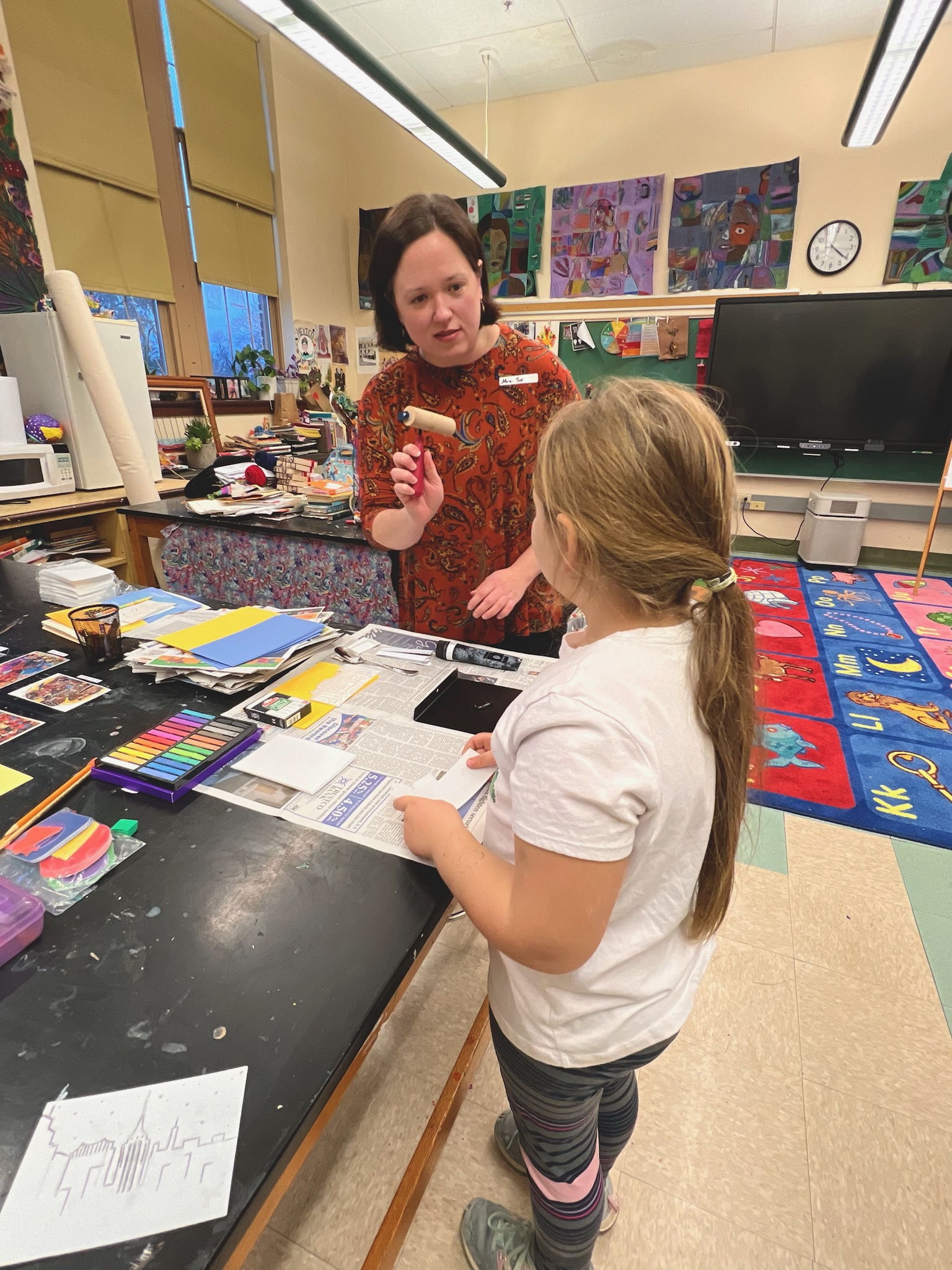
An effective lesson is a balance between guidance and autonomy. It includes lush visuals, diverse and contemporary artist’s examples, a variety of media, and differentiated and scaffolded instruction. Students are encouraged to push themselves to their highest ability, knowing that safety nets, such as graphic organizers, templates, and modified instruction, are available if needed. This scaffolded instruction helps students build upon their knowledge and increases their motivation, autonomy, self-regulation, and confidence. They discover the value of their own voices and expressions while learning to present and share their art.
An art classroom replicates the practices of a professional art studio. Though the teacher guides by visually modeling instruction and imparting information, students are invaluable learning resources for each other. Working cooperatively, students challenge each other to excel and provide support for advancing their skills. They learn to understand and respect each other, developing heightened empathy and sensitivity for cultural perspectives, identities, and ideas.
 Nyssa So